Skip to content
Introduction
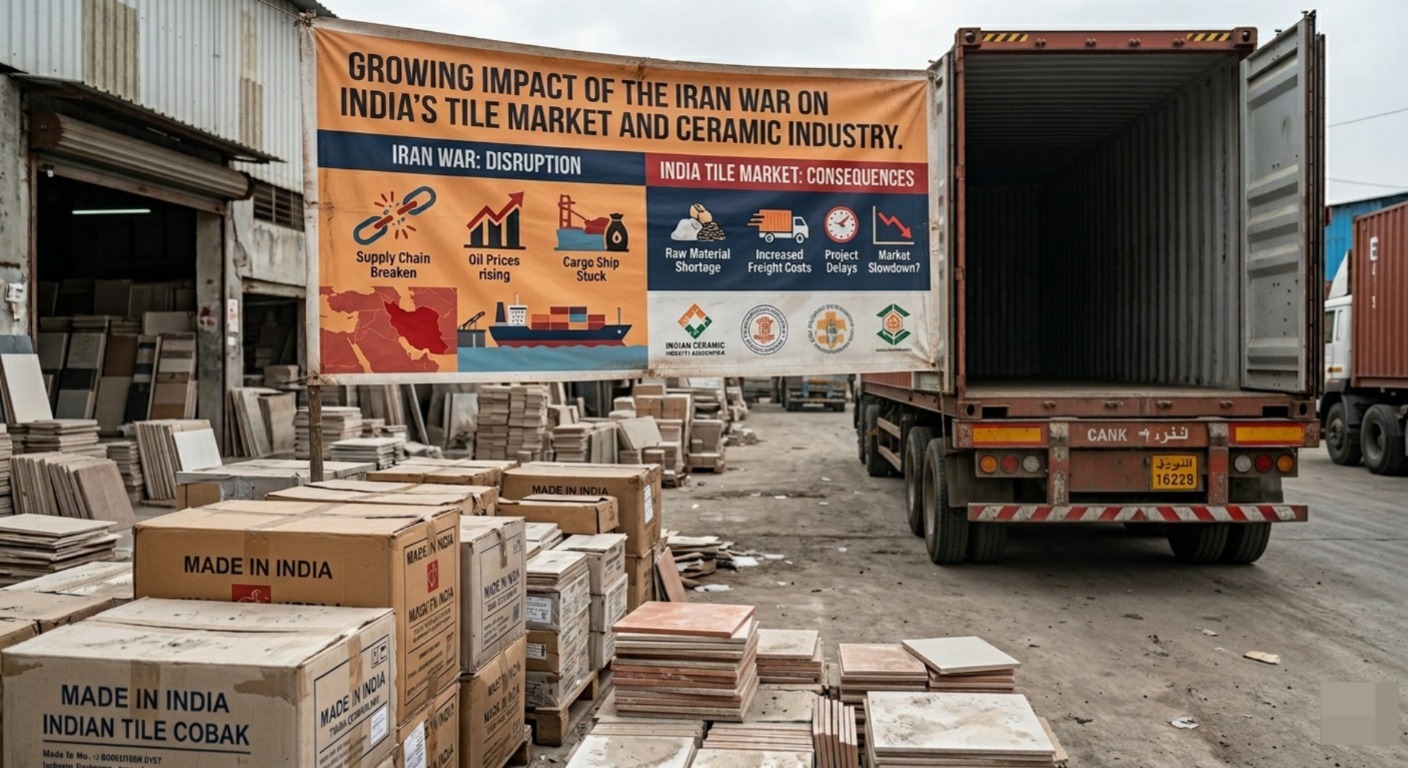
The ongoing Iran war and rising tensions in the Middle East are creating serious challenges for India’s ceramic and tile industry in 2026. India, especially the ceramic manufacturing hub of Morbi in Gujarat, heavily depends on imported natural gas and propane for tile production. As global fuel prices increase and supply chains become unstable, the Indian tile market is witnessing rising production costs, factory shutdowns, export delays, and price hikes across the construction sector.
India is one of the world’s largest ceramic tile producers, and any global geopolitical disruption directly affects manufacturers, exporters, dealers, builders, and consumers. The Iran war has now become one of the biggest external factors impacting the ceramic and tile market in India.
Why the Iran War Is Affecting India’s Tile Market & Industry
The ceramic tile industry relies heavily on fuel such as propane gas, LPG, and natural gas to operate high-temperature kilns. The Middle East conflict has disrupted fuel movement through major shipping routes like the Strait of Hormuz, leading to supply shortages and rising energy prices globally.
Since Morbi manufactures nearly 70% of India’s ceramic tiles, any disruption in fuel supply immediately affects the entire market. Reports suggest that several ceramic factories reduced production or temporarily shut operations due to fuel shortages and high operating costs.
Major Challenges Facing India’s Tile Market and Ceramic Market
1. Rising Fuel Costs
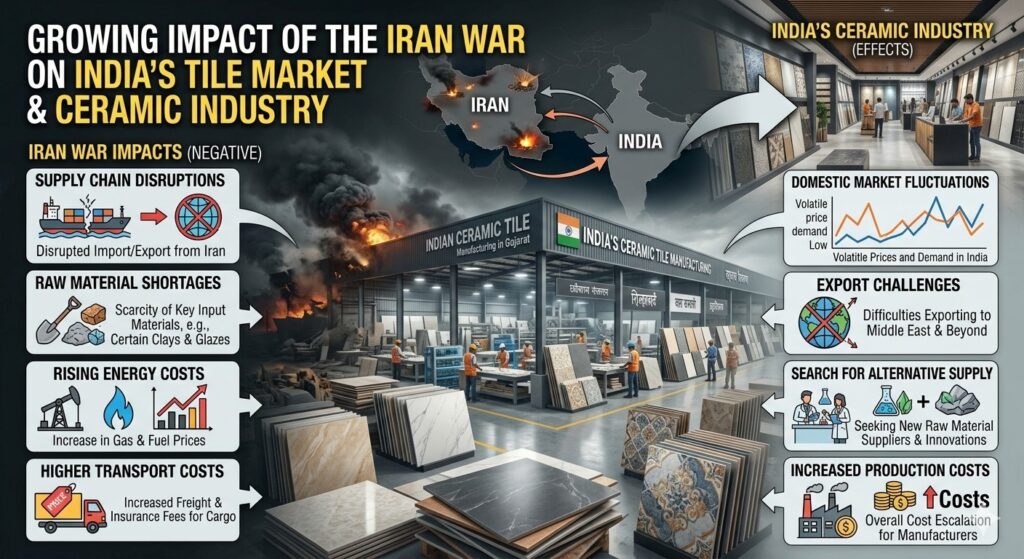
Gas is one of the biggest expenses in ceramic manufacturing. Industry reports indicate that energy contributes nearly 30–40% of production costs for tiles and sanitaryware products.
As the Iran war pushed global fuel prices upward, Indian manufacturers started facing:
- Higher kiln operating expenses
- Increased transportation costs
- Expensive raw material imports
- Reduced profit margins
This directly increased the cost of ceramic tiles in the Indian market.
2. Factory Shutdowns in Morbi
Morbi, Gujarat India’s tiles manufacturing capital has been heavily impacted by the crisis. Several reports revealed that dozens of ceramic units either paused production or operated at reduced capacity due to shortages of propane and LNG.
The shutdowns affected:
- Tile production volumes
- Export commitments
- Employment opportunities
- Supply availability across India
Many migrant workers also reportedly returned to their hometowns after factories slowed operations.
3. Tile Price Increase Across India
One of the biggest visible effects of the Iran war is the increase in tile prices in India. Dealers and distributors across multiple states reported price hikes due to:
- Reduced manufacturing
- Fuel inflation
- Logistics disruptions
- Supply shortages
Industry reports suggest that tile prices in certain categories increased by 8–12%, while transportation and freight costs also rose sharply.
This affects:
- Home construction projects
- Commercial buildings
- Interior design budgets
- Real estate development costs
4. Export Market Disruptions
India exports ceramic tiles to countries across Asia, Europe, Africa, and the Middle East. However, the ongoing conflict has created uncertainty in global shipping and trade routes.
Exporters are now facing:
- Delayed shipments
- Rising container charges
- Higher freight costs
- Reduced overseas demand
Some reports even mentioned that shipping expenses increased drastically after the conflict escalated.
How the Construction Sector Is Getting Affected
The ceramic and tile industry plays a major role in India’s construction ecosystem. As tile prices rise, builders and contractors are forced to revise budgets for residential and commercial projects.
The impact includes:
- Increased project costs
- Delayed interior works
- Reduced profit margins for builders
- Higher renovation expenses for homeowners
Many dealers are also advising customers to purchase available stock immediately due to uncertainty in future pricing and supply.
Can the Indian Tile Industry Recover?
Despite the challenges, India’s ceramic industry remains one of the strongest manufacturing sectors globally. Many manufacturers are now exploring:
- Alternative fuel options
- Energy-efficient production methods
- Domestic supply chain improvements
- Premium tile exports
- Design-focused innovations
Recent industry trends also show that Morbi manufacturers are shifting towards higher-quality and globally competitive tile designs to strengthen long-term growth.
If geopolitical tensions ease and fuel supplies stabilize, the Indian tile market could gradually recover over the next few quarters.
Future Outlook for India’s Tile Market
The future of India’s ceramic and tile industry largely depends on:
- Stability in Middle East geopolitics
- Fuel price normalization
- Government policy support
- Export recovery
- Domestic construction demand
Experts believe that if the Iran war continues for a longer period, the industry may face further production cuts and price increases. However, India’s strong domestic demand and global export potential may help the sector regain momentum in the long run.
The Tile Boutique: Trusted Tiles During Market Uncertainty
As the Iran war continues to impact India’s ceramic and tile market, customers are increasingly looking for trusted tile suppliers that offer quality, durability, and reliable availability. The Tile Boutique is one such growing name known for its modern wall tiles, floor tiles, and premium tile collections for homes and commercial spaces.
During uncertain market conditions and rising tile prices, brands like The Tile Boutique help customers access stylish and dependable tile solutions while supporting India’s evolving construction and interior design industry.
Conclusion
The Iran war has created a ripple effect across India’s ceramic & tile market in 2026. From rising gas prices and factory shutdowns to supply shortages and increasing tile prices, the industry is facing one of its toughest periods in recent years.
However, India’s ceramic sector has shown resilience during previous global crises as well. With innovation, strategic planning, and improved supply chain management, the industry may overcome current challenges and continue its growth journey in the global tile market.
FAQs
1. Why are ceramic tile prices increasing in India?
Ceramic tile prices are increasing mainly because of rising fuel costs, supply chain disruptions, transportation expenses, and reduced production caused by the Iran war and Middle East tensions.
2. Which Indian city is most affected in the ceramic industry?
Morbi in Gujarat is the most affected region because it is India’s largest ceramic manufacturing hub and depends heavily on imported fuel for tile production.
3. Will tile prices reduce in the future?
Tile prices may stabilize if fuel prices reduce and global geopolitical tensions improve. However, short-term price fluctuations may continue depending on international market conditions.
4. How does the Iran war affect home construction projects?
The Iran war indirectly increases construction costs by affecting tile prices, transportation charges, raw material costs, and project timelines across the building industry.
5. Why should customers choose trusted tile brands during market uncertainty?
Trusted tile brands and suppliers help customers get better product quality, reliable stock availability, professional service, and durable tile solutions even during unstable market conditions.