 Skip to content


Selecting the right outdoor flooring is far more than an aesthetic choice; it is a critical investment in safety, structural waterproofing, and long-term durability. When monsoon downpours hit, having high-performance, weather-resistant surfaces ensures your outdoor spaces remain functional, secure, and visually appealing year-round.
“Architecture is the learned game, correct and magnificent, of forms assembled in the light. But true durability is tested in the storm.” — Le Corbusier
Why Standard Indoor Tiles Fail During the Monsoon
Many homeowners make the mistake of extending smooth or polished indoor tiles out to balconies and rooftops. Exposed to relentless rain, these materials fail for three specific reasons:
- Loss of Surface Friction: Polished ceramic and gloss-finished porcelain rely on dry contact. Rainwater creates a micro-hydroplaning layer, reducing friction to near zero and turning walkways into severe slip risks.
- High Porosity & Water Absorption: Low-grade tiles absorb standing water. Moisture trapped in the tile body expands under heat and contracts during cool rain, causing internal stress, hairline cracks, and surface spalling.
- Sub-Surface Seepage & Efflorescence: Absorbed water leaches soluble salts from the mortar bed underneath. As the moisture evaporates, it leaves behind unsightly white crusts (efflorescence) while deteriorating grout lines and transferring dampness down into lower-level ceilings.
Technical Guide: 5 Best Tiles for Rainy Season
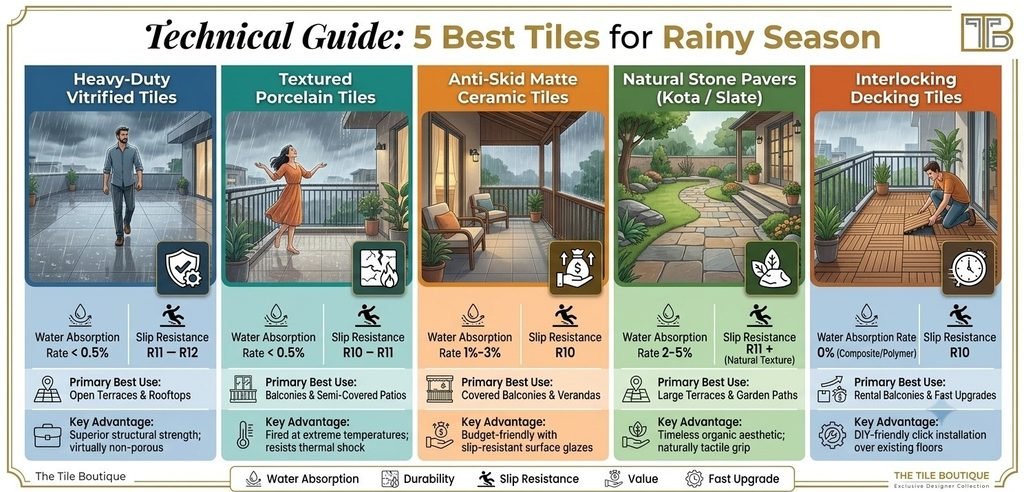
To ensure safety and structural integrity, select tile materials engineered specifically to withstand heavy moisture and high foot traffic.
| Tile Type | Water Absorption Rate | Slip Resistance (R-Rating) | Primary Best Use | Key Advantage |
| Heavy-Duty Vitrified Tiles | < 0.5\% | R11 – R12 | Open Terraces & Rooftops | Superior structural strength; virtually non-porous |
| Textured Porcelain Tiles | < 0.5\% | R10 – R11 | Balconies & Semi-Covered Patios | Fired at extreme temperatures; resists thermal shock |
| Anti-Skid Matte Ceramic Tiles | 1%-3% | R10 | Covered Balconies & Verandas | Budget-friendly with slip-resistant surface glazes |
| Natural Stone Pavers (Kota / Slate) | 2-5% | R11 + (Natural Texture) | Large Terraces & Garden Paths | Timeless organic aesthetic; naturally tactile grip |
| nterlocking Decking Tiles | 0% (Composite/Polymer) | R10 | Rental Balconies & Fast Upgrades | DIY-friendly click installation over existing floors |
“Good design is obvious. Great design is transparent especially when it protects you from the elements while elevating your everyday living experience.”
Key Technical Specifications to Check Before Buying

- Anti-Skid Ratings (DIN 51130 Standards): Aim for R10 for covered balconies, and R11 or R12 for fully exposed terraces.
- Low Porosity: Opt for vitrified or porcelain tiles with a water absorption rate under 0.5% to prevent water logging and deep-seated fungal growth.
- Breaking Strength & Thickness: Outdoor tiles should generally have a thickness of 10mm to 12mm (or 20mm heavy pavers for open roofs) to handle weather strain and impact without cracking.
Installation & Waterproofing Best Tiles Practices for Monsoon Readiness
Even the highest-rated tile will fail if the underlying installation is compromised. Follow this procedural workflow to guarantee a leak-free setup:
1.Slope Gradient Planning:Crucial for preventing standing water pool formation.
Ensure the floor substrate maintains a minimum 1:80 to 1:100 slope slope gradient directed towards drainage channels. Rainwater must clear the surface instantly rather than pool against walls.
2.Dual-Layer Membrane Waterproofing:Must be applied before laying mortar.
Apply a flexible acrylic or polyurethane elastomeric waterproofing compound across the base concrete slab, turning it at least 6 inches up adjacent parapet walls to form a watertight tray.
3.Tile Laying with Polymer Adhesive:Avoid traditional sand-cement paste for outdoors.
Lay tiles using polymer-modified C2-grade tile adhesives. Thin-set adhesive coats ensure full back-bedding coverage, leaving zero air pockets beneath the tile where water can accumulate.
4.Epoxy Grouting & Expansion Joints:Seals tile inter-gaps completely.
Use two-component water-resistant epoxy grout instead of cementitious grout. For areas larger than 120 sq. ft., install 6mm perimeter expansion joints filled with polyurethane sealant to absorb thermal expansion without buckling tiles.
Where to Source Quality: Finding the Ideal Tiles Shop in Chennai
If you are renovating your property and looking to upgrade your open-air zones against heavy coastal rains and tropical downpours, choosing a specialized supplier makes all the difference. For homeowners, architects, and builders seeking curated collections and technical expertise, The Tile Boutique stands out as a premier destination.
Recognized as a leading Tiles Shop in Chennai, The Tile Boutique features an extensive portfolio ranging from heavy-duty matte vitrified options to rustic, slip-resistant stone finishes and high-end 20mm outdoor porcelain slabs tailored specifically for humid monsoon environments. Visiting their design showrooms allows you to test surface textures, review certified R-ratings, and receive tailored advice matching your home’s structural requirements.
Frequently Asked Questions (FAQs)
1. Which tile finish is best to prevent slipping during heavy rain?
Matte finish, punch-textured, and structured anti-skid tiles (with a slip-resistance rating of R10 or higher) are the safest choices for rainy seasons because their surface friction prevents slipping even when completely submerged or wet.
2. Are vitrified tiles suitable for open terraces exposed to direct rain and sun?
Yes, full-body vitrified tiles are an exceptional choice for open terraces due to their extremely low water absorption rates ($<0.5\%$), high load-bearing strength, and robust resistance to extreme temperature changes without fading or warping.
3. How do I stop water seepage through balcony tile joints during the monsoon?
Replace traditional cement grout with waterproof, polymer-modified epoxy grout. Additionally, ensure an elastomeric waterproofing membrane is applied beneath the tile bed during civil installation.
4. Can I lay new anti-skid tiles directly over my existing old terrace tiles?
Yes, provided the existing floor is structurally sound, level, and free of moisture trap issues. You must use a specialized tile-on-tile polymer adhesive (Type 2 or Type 3) along with a bonding primer to ensure proper adhesion.
5. How do I clean algae or fungus off balcony tiles after the rainy season?
Scrub the area using a stiff-bristled brush with a mixture of warm water and a neutral pH outdoor tile cleaner or mild chlorine-free disinfectant. Avoid harsh acid washes, as they can etch tile glazes and degrade grout lines over time.


